
Cleaning Guide
Daily cleaning
- Silicone does not easily attract dirt, but bacteria can still breed on it if it is not cleaned promptly.
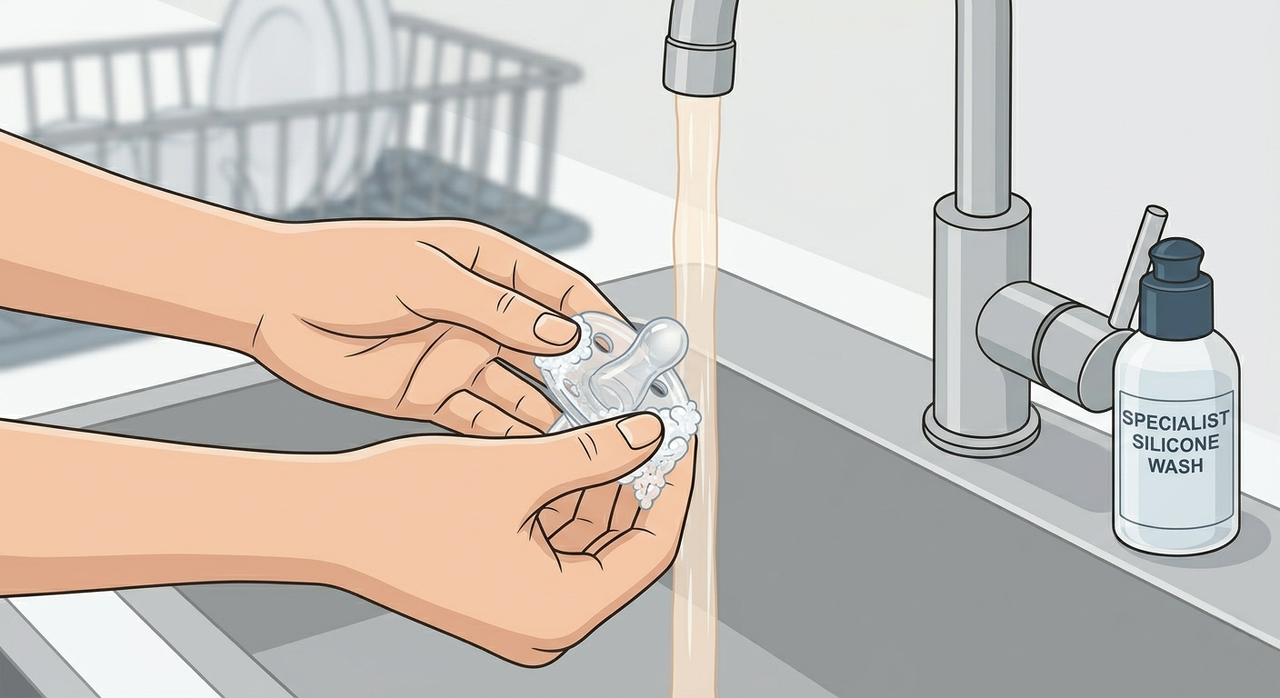
instruct
- After each use: Rinse thoroughly with warm water.
- Using cleaning products: We recommend using a specialized bottle and nipple cleaner made from natural ingredients. Although silicone is corrosion-resistant, you should still avoid using cleaners that are strongly oxidizing, highly acidic, or highly alkaline, or those containing abrasive particles.
- Note: When cleaning, pay special attention to the gap between the nipple and the base, as residue tends to accumulate in these areas.
Storage and Maintenance
Although silicone is heat-resistant, prolonged exposure to sunlight or humid environments can shorten its service life.
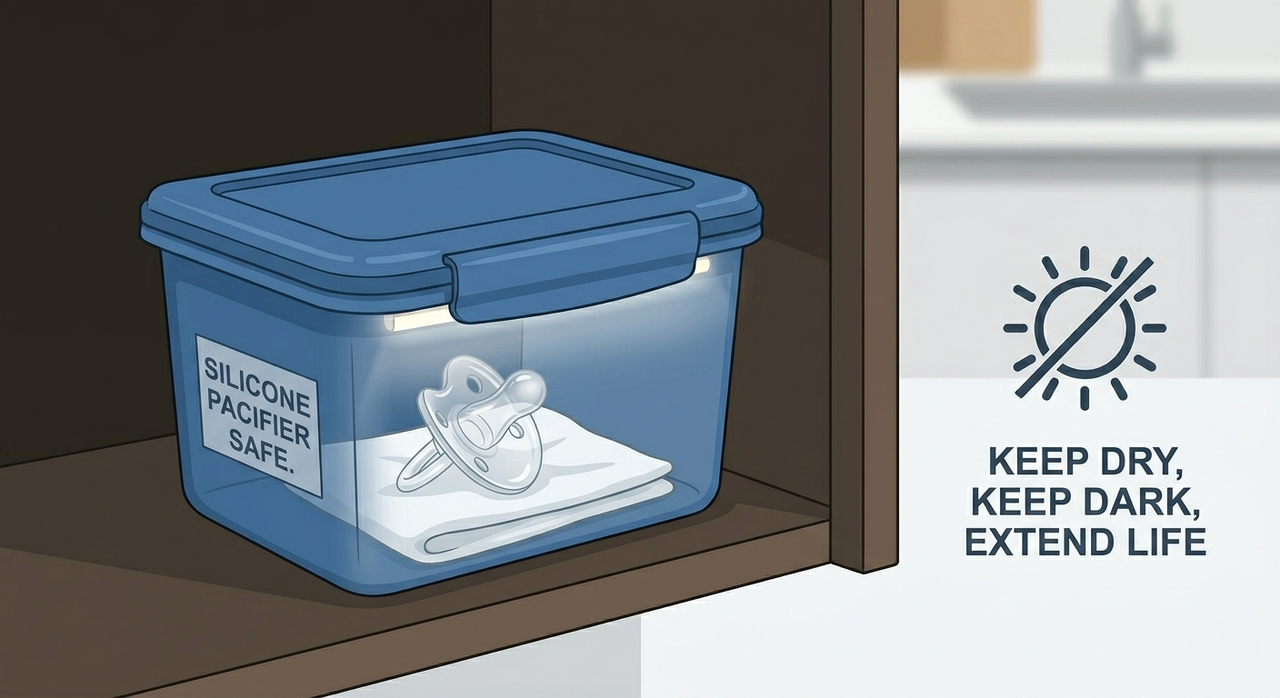
- Store in a dry place: After cleaning or sterilizing, place the pacifier in a well-ventilated area to dry completely. Do not store the pacifier in an airtight container while it is still wet.
- Storage Instructions: Store in a cool, dry place away from direct sunlight (e.g., inside a cabinet). Prolonged exposure to UV light will cause the silicone material to become brittle and deteriorate.
It is recommended to replace the silicone nipple every 2–4 weeks.
Even if it is not yet time for replacement, you should replace it immediately if any of the following situations occur:
- The silicone nipple turns yellow, white, or sticky.
- Cracks, damage, or deformation appear.
- The silicone will become thinner, softer, and less elastic.
- Teeth marks were left on the nipple.
- The nipple connection has come loose.
Please also note:
- – Silicone is more durable than latex, but it will still age after prolonged high-temperature sterilization.
- – Before each use, gently pull it apart and check for cracks.
- – Prolonged use during sleep or frequent chewing will significantly shorten the lifespan of the nipple.